
Secured vs Unsecured Debt
Debt plays a major role in personal and business finances, especially during bankruptcy, restructuring, or collection proceedings. One of the most important distinctions in financial law is the difference between secured and unsecured debt. Understanding how these debts work in real cases can help borrowers, creditors, and businesses better manage financial obligations and legal risks.
What Is Secured Debt?
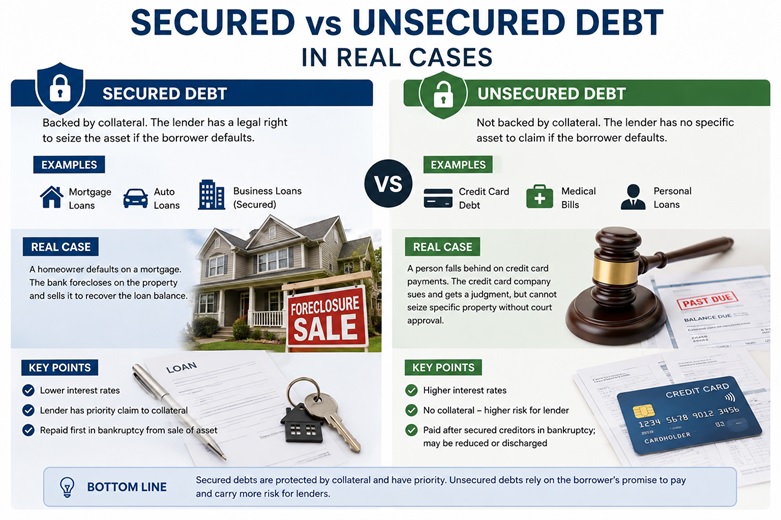
Secured debt is backed by collateral, which is an asset that a lender can claim if the borrower fails to make payments. Common examples include mortgages, auto loans, and certain business loans. In these cases, the lender has a legal interest in the property tied to the loan.
For example, if a homeowner stops making mortgage payments, the lender may begin foreclosure proceedings to recover the remaining debt through the sale of the property. Similarly, missed vehicle loan payments can lead to repossession of the financed car.
Because secured debt offers protection to lenders through collateral, these loans often come with lower interest rates compared to unsecured obligations.
Understanding Unsecured Debt
Unsecured debt does not require collateral. Instead, lenders approve the loan based primarily on the borrower’s creditworthiness and financial history. Credit cards, medical bills, personal loans, and utility balances are common examples of unsecured debt.
In real cases, creditors holding unsecured debt may pursue legal action to recover unpaid balances, but they generally cannot automatically seize property without obtaining a court judgment. During bankruptcy proceedings, unsecured creditors often receive repayment after secured creditors are paid.
Since unsecured loans carry higher risk for lenders, they commonly involve higher interest rates and stricter approval requirements.
How These Debts Are Treated in Insolvency Cases
Secured and unsecured debts are handled differently during insolvency and bankruptcy proceedings. Secured creditors usually maintain priority rights to the collateral connected to the loan. This means they may recover assets or proceeds from asset sales before other creditors receive payment.
Unsecured creditors, however, may only receive partial repayment depending on the debtor’s remaining assets and the structure of the insolvency case. In many situations, unsecured debts may be reduced, negotiated, or discharged entirely through bankruptcy proceedings.
Real-world insolvency cases often involve a combination of both debt types, making financial assessments and legal strategy especially important.
Why Understanding Debt Classification Matters
Knowing whether a debt is secured or unsecured can significantly affect financial planning, repayment obligations, and legal outcomes. Borrowers who understand these distinctions are better prepared to evaluate risks, negotiate repayment terms, and respond to financial difficulties before they escalate.
Professional legal and financial guidance can help individuals and businesses navigate debt-related challenges while protecting assets and complying with applicable laws.
This post was written by Trey Wright, an experienced bankruptcy lawyer Jacksonville FL! Trey is one of the founding partners of Bruner Wright, P.A. Attorneys at Law, specializing in bankruptcy law, estate planning, and business litigation.
The information provided on this website does not, and is not intended to, constitute legal advice; all information, content, and materials available on this site are for general informational purposes only. Information on this website may not constitute the most up-to-date legal or other information. This website contains links to other third-party websites. Such links are only for the convenience of the reader, user or browser; the ABA and its members do not recommend or endorse the contents of the third-party sites.
 Intelligences Law Blog